
Humidity control
Water Damage Dehumidification in Atlanta, GA
Wet materials release water into the air. Our LGR dehumidifiers pull it out, so walls, floors, and cabinets keep drying instead of soaking it back up.
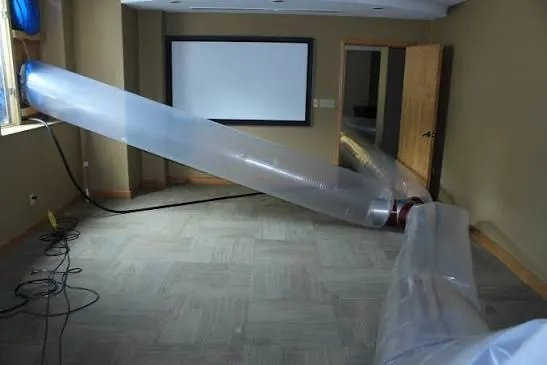
Every wet wall, floor, and cabinet is giving off water into the room. If nothing removes it, the air gets saturated, drying stalls, condensation shows up on windows and cold pipes, and materials that were drying start taking moisture back in. On an Atlanta summer day the outdoor air is already heavy with it. Water damage dehumidification in Atlanta is what turns a sticky, stalled dry-out into one that actually finishes.
We use low grain refrigerant (LGR) dehumidifiers built for restoration. A household unit slows down as the air gets drier, but an LGR keeps pulling water at the low humidity levels that drying needs. We size them to the room and the amount of wet material, pair them with air movers, and close off the drying area so we are not trying to dry the whole house. Ducting lets one unit dry a basement or crawlspace. This is the engine behind our structural drying.
We check humidity and material readings daily and log them. That tells us when to add a unit, move one, or pull them out, and it gives your insurer a record of why each piece of equipment was there. If you already have dehumidifiers running and nothing is changing, call for a free assessment and a moisture check, and we will tell you why.
Call us if you notice
- Condensation on windows, mirrors, or cold water pipes
- The house feels clammy days after the water was removed
- A household dehumidifier keeps filling up but nothing dries
- A musty smell in a basement, crawlspace, or closed room
- Doors and drawers sticking after a water loss
- Wood floors or trim swelling in rooms the water never reached
Right now, if it's safe
- Keep the house closed up. Open windows in humid weather let more moisture in.
- Run any dehumidifier you own in the wettest room, and empty the bucket often.
- Move clothes, paper, and boxes out of wet rooms. They soak up moisture from the air.
- Close doors to dry rooms so the damp air does not spread through the house.
- Note where you see condensation, sticking doors, or smells, so we know where to look first.
How we handle dehumidification
- 01
Measure the air
We read temperature and humidity in wet rooms, dry rooms, and outside to see how much water the air is holding.
- 02
Size the units
We work out how many LGR dehumidifiers the space needs based on its size and how much material got wet.
- 03
Close the chamber
Doors and plastic sheeting create a drying zone, so the dehumidifiers work on your wet area, not the whole house.
- 04
Pair with airflow
Air movers lift moisture off surfaces, and the dehumidifiers pull it from the air before it can soak back in.
- 05
Adjust daily
Daily readings tell us when to add, move, or remove units, and we log every one for your records.
Why Atlanta calls Mitigate First
Restoration-grade units
LGR dehumidifiers keep removing water at humidity levels where household units barely work.
Sized, not guessed
We match units to the room and the wet materials, so drying does not stall and you are not paying for extra equipment.
Made for Atlanta summers
We seal off the drying area, so muggy outdoor air is not undoing the work inside.
5.0 on Google
Real reviews from people we have helped
I had a great experience with Mitigate First. They were professional, responsive, and easy to work with throughout the process. It’s not always easy to find a company you can trust when dealing with water damage, but they made the experience much less stressful. I really appreciate their hard work and would definitely recommend them to anyone in need of their services
Called Mitigate First for a flood restoration job and they were on-site fast, walked me through exactly what needed to happen, and had the water out and the space dried properly without any surprises. Pricing was fair and clear up front — no padding, no change orders. Would use them again and already have them saved as my go-to.
Had a leak in my bathroom, and Mitigate First came out immediately and was great! Levi and Moysh were awesome! They are super knowledgeable and professional, and helped me through the whole process. Definitely recommend!
Questions
Dehumidification FAQ
Why can't I just use my own dehumidifier?
A household unit is fine for keeping a dry basement dry. After a water loss it falls behind fast, and it slows down as humidity drops, right when drying needs it most. LGR units remove far more water a day and keep working at lower humidity.
Do I pay for each day the dehumidifiers run?
Drying equipment is typically billed by the day as part of the job, which is why we pull units as soon as the readings say they are no longer needed. The daily log shows you, or your insurer, exactly why each one was there.
Will the dehumidifiers raise my power bill?
Some. Each unit runs around the clock on a standard outlet for a few days, and we spread them across circuits so breakers do not trip. Keep your bill and ask your adjuster whether the added electricity can be included in the claim.
How does humidity affect water damage drying in Atlanta?
Atlanta summers are humid, and that heavy air slows evaporation from wet materials and can even push moisture back into them. That is why we close off the drying area and control it with dehumidifiers instead of relying on open windows or outside air.
Can dehumidification alone fix water damage?
Not when water got inside walls, under floors, or into insulation. Dehumidifiers dry the air, but wet cavities also need air movement and sometimes opening up. We use both, and our readings show when each material is truly dry.
Related
Other ways we can help
Dehumidification across Georgia, including these metro Atlanta cities:
Answering now, 24/7
Day or night, one call gets it handled.
Talk to a real person right now, anywhere in Georgia. Free on-site assessment, and we work directly with your insurance company.