
Floodwater cleanup
Flood Damage Cleanup in Atlanta, GA
Floodwater is not clean water. We remove it, take out what it contaminated, sanitize, and dry the structure so your home is ready to rebuild.
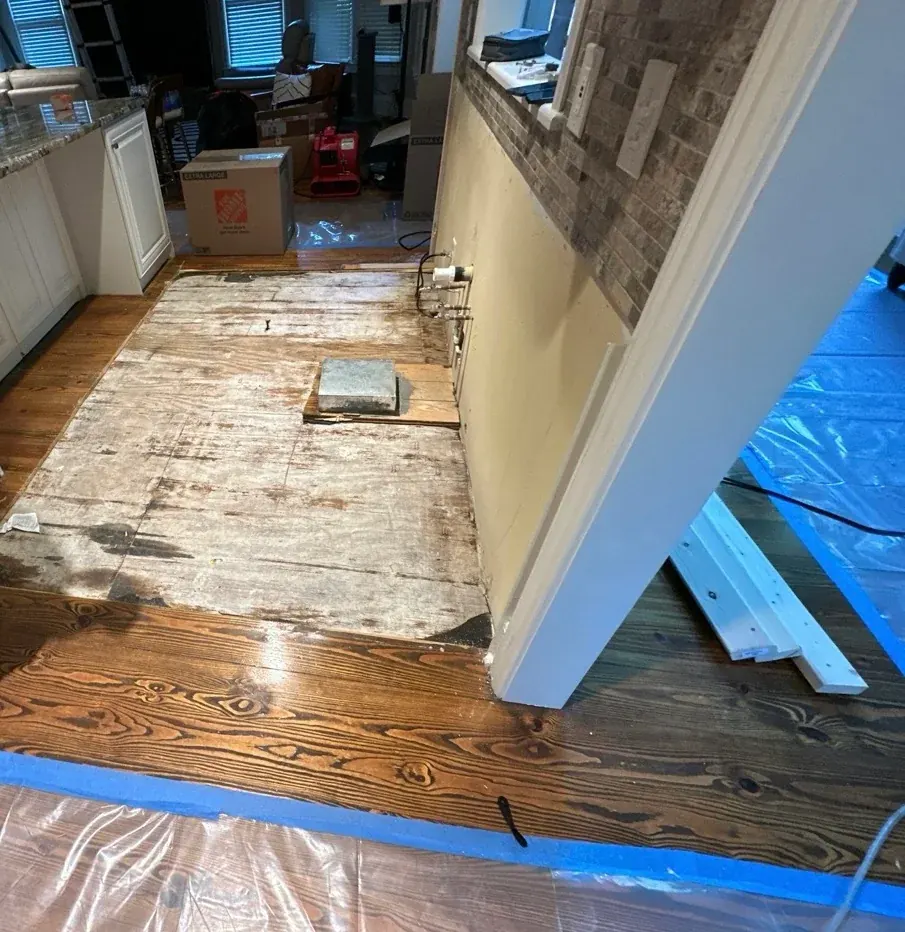
When water comes in from outside, from a creek over its banks, a flash flood, or stormwater running down the driveway, it carries soil, fertilizer, and whatever was in the street. Restoration standards treat it as Category 3, black water, from the moment it enters. Every porous material it touched, like carpet, pad, insulation, and the bottom of the drywall, has to come out. Fast flood damage cleanup in Atlanta keeps that contamination, and the mold that follows, from spreading.
We treat floodwater as contaminated from the start. Crews wear protective gear, extract the water and silt, and remove porous materials to a clean line above the water mark. Framing and slab get cleaned and treated with antimicrobial before drying begins, because drying dirty materials in place just locks the problem in. Then air movers and LGR dehumidifiers run until every material reads dry. If a storm also opened the roof or brought a tree down, see storm damage cleanup.
Flood claims work differently. Damage from rising surface water is usually covered by a separate flood policy, often through the NFIP, not by standard homeowners insurance, while water from a burst pipe or a storm-damaged roof falls under the homeowner policy. We document the high-water mark, every removed material, and the drying, so either kind of claim has what it needs. Learn more on our insurance page.
What we handle
- Stormwater or creek flooding that reached living space
- Mud and silt left on floors after the water went down
- Wet drywall with a visible water line across the room
- Flooring buckling or lifting across several rooms
- Flooded garages, crawlspaces, and lower levels
- Water through doors and walls after a flash flood
Right now, if it's safe
- Do not go back in until the water has stopped rising and you know the power is off.
- Avoid touching floodwater. Wear boots and gloves, and wash with clean water if it gets on your skin.
- Do not run the HVAC if water reached the ductwork or air handler. It can spread contamination.
- Photograph the high-water line on the walls and every damaged item before removing anything.
- Call your insurance company to open a claim, and ask whether you have a separate flood policy.
How we handle flood damage cleanup
- 01
Safety first
We confirm electrical hazards are handled and treat everything the water touched as contaminated.
- 02
Water and silt out
Extraction removes the water, then we clear out the mud and debris it left behind.
- 03
Remove to a clean line
Carpet, pad, insulation, and drywall that floodwater touched come out, cut cleanly above the water line.
- 04
Clean and treat
We clean framing, slab, and hard surfaces and apply antimicrobial before any drying equipment goes in.
- 05
Dry and verify
Air movers and LGR dehumidifiers dry the structure. We take readings daily until it is ready for rebuild.
Why Atlanta calls Mitigate First
Handled as black water
Every flood gets Category 3 handling, because cutting corners with contaminated water is not an option.
Clean before dry
We sanitize first, then dry. Drying contaminated materials in place only seals the problem inside your walls.
Ready for either claim
Flood policy or homeowners policy, our photos, water-line records, and drying logs show the adjuster exactly what happened.
5.0 on Google
Real reviews from people we have helped
I had a great experience with Mitigate First. They were professional, responsive, and easy to work with throughout the process. It’s not always easy to find a company you can trust when dealing with water damage, but they made the experience much less stressful. I really appreciate their hard work and would definitely recommend them to anyone in need of their services
Called Mitigate First for a flood restoration job and they were on-site fast, walked me through exactly what needed to happen, and had the water out and the space dried properly without any surprises. Pricing was fair and clear up front — no padding, no change orders. Would use them again and already have them saved as my go-to.
Had a leak in my bathroom, and Mitigate First came out immediately and was great! Levi and Moysh were awesome! They are super knowledgeable and professional, and helped me through the whole process. Definitely recommend!
Questions
Flood Damage Cleanup FAQ
Is flood damage covered by my homeowners policy?
Usually not, if the water rose from outside. Surface flooding is normally covered by a separate flood policy, often through the NFIP. Water that came through a storm-damaged roof or from a burst pipe is a different claim. We document the source and the high-water mark either way.
Can flood-soaked drywall be dried and saved?
No. Drywall and insulation touched by floodwater are contaminated and have to come out, cut cleanly above the highest wet point. Framing and concrete can be cleaned, treated, and dried in place.
Is it safe to stay in the house after a flood?
If floodwater reached the main living areas, it is usually best to stay elsewhere until the contaminated materials are out and the house is cleaned. If only a garage or lower level took water, many families can stay upstairs. We will give you a straight answer once we see it.
What can be saved after flood damage cleanup in Atlanta?
Solid wood furniture, metal, glass, and hard plastics can often be cleaned and kept. Mattresses, upholstered furniture, carpet, and paper that sat in floodwater usually cannot. We walk the house with you and help you decide item by item.
How soon after a flood should cleanup start?
As soon as the water stops rising and it is safe to go in. Floodwater soaks deeper every hour, and wet materials can start growing mold within a day or two in Georgia heat. The sooner contaminated materials come out, the more of the structure can be saved.
Related
Other ways we can help
Flood Damage Cleanup across Georgia, including these metro Atlanta cities:
Answering now, 24/7
Day or night, one call gets it handled.
Talk to a real person right now, anywhere in Georgia. Free on-site assessment, and we work directly with your insurance company.